The Practice
of Being Human
One pose. One breath. One question.
What happens when a human being stops trying so hard to become a human doing?
This is a book about the unfinished work of being human.
About love.
Belonging.
Loss.
Rest.
And all the ways we try to find our place in the world.
There is always another role to inhabit. Another responsibility to carry. Another version of ourselves we think we should become.
We may imagine that eventually we will arrive.
We will know who we are.
We will become enough.
But perhaps becoming was never meant to have a destination.
Perhaps there is room to meet ourselves along the way.
These poems take place in a yoga class, where a teacher and her students practice more than poses.
They practice being seen. Asking for what they need. Staying with uncertainty. Receiving love. Putting something down when it has become too heavy to carry.
You do not need to practice yoga to recognize these moments.
You may have met them in a relationship, at work, in a quiet room, or in the space between who you have been and who you are becoming.
The poems are intentionally small.
One pose.
One breath.
One question.
There is room here to pause.
To smile.
To feel something you do not yet have words for.
You can read from beginning to end, following the movement of a practice.
Or open to a page and stay there for a while.
Some days, you need a question.
Other days, company.
You do not have to find a lesson in every poem.
You do not have to agree.
You are welcome to bring your experience to these pages.
The body changes.
The breath changes.
We change.
And then we meet ourselves again.
Perhaps being human asks us to keep returning.
Beneath our identities, responsibilities, accomplishments, relationships, and expectations, there may be a quieter question:
Can I be here as I am?
Still learning.
Still loving.
Still unsure.
These pages leave room for that.
For the lives we carry.
For the people we miss.
For the selves we have not met yet.
We are unfinished.
And maybe that is the practice.
ARRIVAL: MEETING YOURSELF
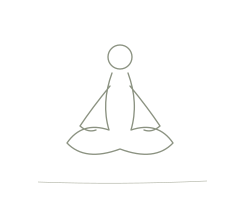
Being Seen
“Today,” the yoga teacher said, “we’re going to practice a pose called Being Seen.”
The students looked at one another.
“How do we do it?”
“Tell the truth.”
“About what?”
“Who you are.”
“And then what?”
“Let it be enough.”
The room grew quiet.
“What if they don’t understand?”
“Breathe.”
“What if I want to explain?”
“Notice.”
“What if I want to reach for them?”
“Stay.”
“What if they still don’t see me?”
The yoga teacher smiled.
“Hold the pose.”
And suddenly, everyone understood that the hardest part of the pose wasn’t allowing themselves to be seen.
It was remaining with themselves when they weren’t.
Because sometimes the nervous system wants to reach.
To explain.
To prove.
To become more visible.
To make another person understand.
“Breathe,” the yoga teacher said.
So they did.
And for a moment, no one chased.
No one performed.
No one abandoned themselves to be understood.
They simply stayed.
Maybe the practice isn't learning how to be seen. Maybe the practice is learning how to remain with ourselves when we aren't.
Being Known
“Today,” the yoga teacher said, “we’re going to practice a pose called Being Known.”
The students looked at one another.
“How do we do it?”
“Let someone come close.”
“How close?”
“Close enough to know you.”
The room grew quiet.
“What if I’m afraid of what they’ll find?”
“Notice.”
“What if I want to show them only the good parts?”
“Breathe.”
“What if I make a joke?”
“Notice.”
“What if I change the subject?”
“Stay.”
“What if being known makes me want to disappear?”
The yoga teacher smiled.
“Hold the pose.”
And suddenly, everyone understood that being known was different from being seen.
Being seen asked them to show up.
Being known asked them not to hide once someone came close.
Because sometimes the nervous system knows exactly how to create distance.
Become funny.
Become busy.
Become useful.
Become impressive.
Reveal just enough to feel connected, but not enough to feel exposed.
“Breathe,” the yoga teacher said.
So they did.
And for a moment, no one performed.
No one redirected.
No one became a more acceptable version of themselves.
They simply stayed.
Maybe the practice isn’t learning how to let someone know us.
Maybe the practice is noticing all the ways we disappear when they begin to.
Identity
“Today,” the yoga teacher said, “we’re going to practice who we are.”
A student began:
“I’m a mother.”
“Without that.”
“A professor.”
“Without that.”
“A friend.”
“Without that.”
She hesitated.
“I don’t know.”
The teacher smiled.
“There you are.”
The room became quiet.
Without the titles.
Without the roles.
Without who needed them.
Without what they had accomplished.
Who remained?
Maybe identity isn’t the collection of things we can name about ourselves.
Maybe sometimes we have to loosen every label before we can meet the person underneath.
Perfection
“Today,” the yoga teacher said, “we’re going to practice being unfinished.”
“Can we fix things?”
“Eventually.”
“What should we fix first?”
“Nothing.”
Someone sighed.
“What if people see the parts I’m still working on?”
“Let them.”
Maybe perfection is seductive because finished things cannot surprise us.
But humans are not finished things.
We contradict ourselves.
We learn.
We unravel.
We begin again.
Maybe being unfinished isn’t evidence that something is wrong.
Maybe it is evidence that we are still becoming.
Enough
“Today,” the yoga teacher said, “we’re going to practice enough.”
“Enough what?”
“Just enough.”
“But how will we know?”
“Notice when you want more.”
More effort.
More praise.
More proof.
More reassurance.
More evidence that you are doing life correctly.
“What if I could do better?”
“You probably could.”
“Then shouldn’t I?”
The teacher smiled.
“Breathe.”
Maybe enough doesn’t mean there is nowhere left to grow.
Maybe enough means growth is no longer required for you to deserve your own acceptance.
SUN A: AWAKENING
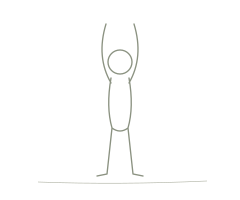
Beginner’s Mind
“Today,” the yoga teacher said, “we’re going to practice not knowing.”
“But we came here to learn.”
“Exactly.”
A student moved confidently into the pose.
“I already know this one.”
“Then forget.”
She looked confused.
“Why?”
“Because knowing can make us stop looking.”
So they approached familiar things as if they had never encountered them before.
Their bodies.
Their breath.
Each other.
Maybe wisdom isn’t collecting enough answers.
Maybe wisdom is remaining curious after we think we already know.
Presence
“Today,” the yoga teacher said, “we’re going to practice being here.”
“We are here.”
“Are you?”
Someone was thinking about yesterday.
Someone was planning dinner.
Someone was rehearsing a conversation that had not happened yet.
“Come back,” the teacher said.
“To what?”
“This.”
One breath.
One body.
One moment.
Maybe presence is not something we achieve.
Maybe it is somewhere we return
again
and again
and again.
Stillness
“Today,” the yoga teacher said, “we’re going to practice stillness.”
“For how long?”
The yoga teacher smiled.
“You’re already trying to finish it.”
The students laughed.
“What are we supposed to do?”
“Nothing.”
The room grew uncomfortable.
Because doing nothing is difficult when you have learned to measure your life by what you accomplish.
“Breathe,” the teacher said.
So they did.
And beneath all the planning, fixing, producing, and becoming,
there they were.
Maybe stillness isn’t the absence of movement.
Maybe stillness is where we meet the person who was there before all the doing began.
The Pause
“Today,” the yoga teacher said, “we’re going to practice the pause.”
“What do we do?”
“Wait.”
“For what?”
“Long enough to know whether you need to do anything at all.”
The room became uncomfortable.
They were good at reacting.
Replying.
Explaining.
Fixing.
Defending.
Reaching.
“What if I know what I want to say?”
“You can still wait.”
Maybe the pause is not indecision.
Maybe it is the small space between what happens to us and what we choose to do next.
And maybe freedom lives there.
Discomfort
“Today,” the yoga teacher said, “we’re going to practice discomfort.”
“Why would we want to do that?”
“Because you already do.”
The students laughed.
“How do we know when to stay?”
“Listen.”
“And when to leave?”
“Listen.”
“That’s the same answer.”
“Exactly.”
The room grew quiet.
They were used to treating discomfort like an instruction.
Fix it.
Escape it.
Explain it.
Make it stop.
“What if something feels uncomfortable because it’s wrong?”
“It might.”
“What if it feels uncomfortable because it’s new?”
“It might.”
“How do I know the difference?”
“Stay long enough to become curious.”
So they did.
They noticed the urge to move before movement was necessary.
The urge to escape before they understood what they were escaping.
The urge to call something dangerous simply because it was unfamiliar.
“Breathe,” the yoga teacher said.
So they did.
And for a moment,
discomfort was not a problem.
It was information.
Maybe the practice isn’t learning how to tolerate everything that hurts.
Maybe the practice is learning not to run from every sensation that asks us to grow.
SUN B: BUILDING HEAT
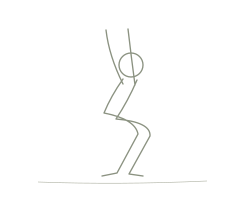
Performance
“Today,” the yoga teacher said, “we’re going to practice without performing.”
“For who?”
“Exactly.”
The students looked around.
They adjusted their posture.
Their clothes.
Their expressions.
“Notice.”
They did.
How quickly a room becomes an audience.
How quickly a life does too.
“What happens if nobody is impressed?”
The teacher smiled.
“You still happened.”
Maybe the practice isn’t becoming less impressive.
Maybe it is remembering that we were never required to impress anyone to be real.
Comparison
“Today,” the yoga teacher said, “we’re going to practice comparison.”
Everyone immediately looked around the room.
The teacher laughed.
“There it is.”
One body bent farther.
Another balanced longer.
Someone seemed stronger.
Someone seemed effortless.
“What should we do when someone is better?”
“Notice what that word does to you.”
They returned to their mats.
Maybe another person’s expansion doesn’t reveal our inadequacy.
Maybe there is enough room for someone else to bloom without making us smaller.
Ambition
“Today,” the yoga teacher said, “we’re going to practice wanting more.”
“That sounds easy.”
“Without believing you need to be more.”
That was harder.
They knew how to strive.
To climb.
To become.
“What’s wrong with ambition?”
“Nothing.”
“Then what are we practicing?”
“Wanting something without making your worth dependent on reaching it.”
Maybe we can desire the mountain
without believing the person at the bottom is less worthy than the person at the top.
Productivity
“Today,” the yoga teacher said, “we’re going to practice doing nothing.”
“For how long?”
The teacher smiled.
“There it is.”
The room laughed.
Then became restless.
No goal.
No outcome.
Nothing to check off.
“What are we accomplishing?”
“Nothing.”
For some reason, that felt terrifying.
Maybe we have spent so long becoming human doings that simply being feels unproductive.
But perhaps a life does not have to produce something every moment
to be worth living.
Usefulness
“Today,” the yoga teacher said, “we’re going to practice not being needed.”
No one moved.
“That sounds terrible.”
“Why?”
“Because I like helping people.”
“Is that the only reason?”
The room grew quiet.
Who were they when nobody needed advice?
Help?
Strength?
Competence?
“What do I offer then?”
“Your presence.”
Maybe usefulness is beautiful.
But maybe we were never meant to confuse being needed
with being loved.
Failure
“Today,” the yoga teacher said, “we’re going to practice failure.”
“On purpose?”
“No.”
“Then how?”
“Try something.”
Someone fell out of the pose.
“There.”
She laughed.
“That’s it?”
“That’s it.”
No catastrophe followed.
No one loved her less.
The room remained standing.
Maybe failure is painful because we make an event into an identity.
Something failed.
Something ended.
Something didn't work.
But you are still here.
Breathe.
Begin again.
STANDING SERIES: LEARNING TO STAY
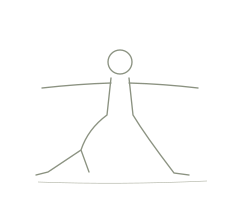
The Edge
“Today,” the yoga teacher said, “we’re going to practice finding the edge.”
“How far should we go?”
“Until your body says enough.”
“What if I can go farther?”
“That wasn't the question.”
They had learned that growth required pushing.
That discomfort meant progress.
That stopping meant weakness.
“Listen,” the teacher said.
Maybe courage is not always going farther.
Maybe wisdom is learning the difference between the discomfort that expands us
and the pain that asks us to stop.
Boundaries
“Today,” the yoga teacher said, “we’re going to practice saying no.”
“No.”
“Good.”
Everyone laughed.
Then it became harder.
“What if they’re disappointed?”
“They might be.”
“What if they think I’m selfish?”
“They might.”
“What if they leave?”
The teacher paused.
“They might.”
Nobody laughed anymore.
Maybe boundaries are difficult because they reveal something we cannot control:
what other people do when we stop abandoning ourselves to keep them comfortable.
Anger
“Today,” the yoga teacher said, “we’re going to practice anger.”
“I thought yoga was supposed to make us calm.”
The teacher smiled.
“Who told you that?”
The room grew quiet.
“So what do we do with it?”
“Feel it.”
“What if it’s uncomfortable?”
“Stay.”
“What if I want to say something?”
“Breathe first.”
“What if I want to make it go away?”
“Listen first.”
“To what?”
“What it came here to tell you.”
The students closed their eyes.
Beneath some anger was hurt.
Beneath some was fear.
Beneath some was exhaustion.
Beneath some was a boundary that had been crossed too many times.
And some anger was simply anger.
It did not need to become more acceptable before it was allowed to exist.
“What do we do with it now?”
“Choose.”
Because feeling anger and acting from anger were not the same practice.
“Breathe,” the yoga teacher said.
So they did.
And for a moment,
no one swallowed it.
No one weaponized it.
No one apologized for feeling it.
They simply listened.
Maybe the practice isn’t learning how not to be angry.
Maybe the practice is learning how to hear what anger has to say
without letting it decide what happens next.
Asking
“Today,” the yoga teacher said, “we’re going to practice asking.”
“For what?”
“What you need.”
Someone raised her hand.
“What if they say no?”
“They might.”
“Then why ask?”
“Because asking and receiving are two different practices.”
The room became quiet.
They had learned to hint.
To anticipate.
To hope someone would notice.
To become disappointed when they didn’t.
Maybe asking isn’t controlling the answer.
Maybe asking is trusting ourselves enough to give our needs a voice.
Uncertainty
“Today,” the yoga teacher said, “we’re going to practice uncertainty.”
“How?”
“I don’t know.”
The students waited for the real answer.
It never came.
“What happens next?”
“I don’t know.”
“Are we doing this correctly?”
“I don’t know.”
Someone laughed.
Someone became irritated.
Someone wanted instructions.
“Notice,” the teacher said.
Maybe uncertainty isn’t a problem waiting to be solved.
Maybe sometimes not knowing is the pose.
Breathe.
Stay.
Let the question remain a question.
Control
“Today,” the yoga teacher said, “we’re going to practice control.”
“Finally,” someone whispered.
The teacher laughed.
“By letting go of it.”
The room groaned.
“What if something goes wrong?”
“It might.”
“What if it doesn’t happen the way I planned?”
“It might not.”
“Then what am I supposed to do?”
“Participate.”
Maybe control is what we reach for when uncertainty feels unbearable.
But participation asks something different.
Show up.
Pay attention.
Respond.
And leave enough room for life to surprise you.
Concern
“Today,” the yoga teacher said, “we’re going to practice concern.”
“For ourselves?”
“For someone you care about.”
“That’s easy.”
“Without fixing anything.”
The room grew quiet.
“What if they’re struggling?”
“Care.”
“What if I know what they should do?”
“Notice.”
“What if I can help?”
“Ask.”
“What if they don’t want my help?”
“Stay.”
Someone shifted uncomfortably.
“But doing nothing feels like I don’t care.”
“Who said caring requires doing?”
The students thought about all the ways love had taught them to move.
To check.
To remind.
To anticipate.
To advise.
To rescue.
To carry what belonged to someone else.
“What do I do with the worry?”
“Breathe.”
“And then?”
“Let them have their life.”
The room grew quiet.
Because sometimes concern was love.
And sometimes concern was fear trying to become control.
Maybe the practice isn’t learning how to care less.
Maybe the practice is learning how to care deeply
without believing that love makes us responsible for another person’s path.
BALANCE: MEETING ONE ANOTHER
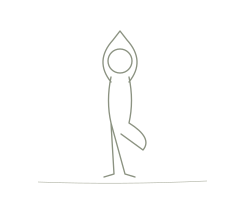
Commitment
“Today,” the yoga teacher said, “we’re going to practice a pose called Commitment.”
The students looked uneasy.
“How long do we have to hold it?”
The yoga teacher smiled.
“That’s the first thing you want to know?”
A few students laughed.
“What if I need to leave?”
“You can.”
“What if I change my mind?”
“You can.”
“What if staying means I lose myself?”
“Notice.”
“What if I’m not sure?”
“Breathe.”
“What if there might be something better?”
“Notice.”
“What if I want to leave before I know?”
“Stay.”
The room grew quiet.
“But how do I know when staying is commitment and when staying is fear?”
“You listen.”
“To what?”
“Yourself.”
And suddenly, everyone understood that commitment wasn’t the absence of uncertainty.
It wasn’t knowing how the story would end.
It wasn’t promising never to change.
Commitment was choosing to remain present long enough to discover what was actually there.
Because sometimes the nervous system mistakes closeness for confinement.
Sometimes possibility feels safer than choosing.
Sometimes leaving first feels safer than being left.
Sometimes we call it freedom when what we really want is an exit.
“Breathe,” the yoga teacher said.
So they did.
And for a moment, no one searched for the door.
No one predicted the ending.
No one demanded certainty before choosing the present.
They simply stayed.
Maybe the practice isn’t learning how to promise forever.
Maybe the practice is learning not to leave just because staying asks something of us.
Reciprocity
“Today,” the yoga teacher said, “we’re going to practice reciprocity.”
“Do we need partners?”
“You already have them.”
They thought about the people they loved.
Who called.
Who listened.
Who remembered.
Who reached.
And who didn't.
“What if I’m always the one reaching?”
“Notice.”
“What if I stop?”
“Then you may learn something.”
The room grew uncomfortable.
Maybe reciprocity isn’t keeping score.
Maybe it is noticing whether connection can move in both directions
without one person carrying it all the way home.
Intimacy
“Today,” the yoga teacher said, “we’re going to practice intimacy.”
Everyone suddenly became interested in their mats.
The teacher laughed.
“Not that kind.”
“What kind?”
“The kind where you stop hiding.”
Silence.
“What do we have to share?”
“Nothing you don’t want to.”
“Then how do we practice?”
“Be present without performing.”
Maybe intimacy isn’t disclosure.
Maybe it isn’t telling someone everything.
Maybe intimacy begins when we stop managing how we are experienced
and allow another person to meet whoever is actually there.
Love
“Today,” the yoga teacher said, “we’re going to practice love.”
“That one sounds easy.”
The teacher smiled.
“Does it?”
The room grew quiet.
“How do we do it?”
“Let something matter.”
“And then?”
“Let it be what it is.”
“What if I want more?”
“You can.”
“What if they don’t?”
“Breathe.”
“What if loving them means I want them to stay?”
“It probably will.”
“What if they leave?”
“Love them anyway.”
Someone looked up.
“Isn’t that letting go?”
“Sometimes.”
The students had thought love was something that became real when it was returned.
When it stayed.
When it chose them back.
When it became the story they hoped it would become.
But maybe love was never the promise that something would remain.
Maybe love was simply the courage to let something matter without possessing its outcome.
“Breathe,” the yoga teacher said.
So they did.
And for a moment,
no one negotiated.
No one convinced.
No one held tighter to make love stay.
They simply loved.
Maybe the practice isn’t learning how to hold on to what we love.
Maybe the practice is learning how to love without turning love into a grip.
Trust
“Today,” the yoga teacher said, “we’re going to practice trust.”
“In whom?”
“Start with yourself.”
“What does that look like?”
“Listen.”
“To what?”
“The quiet thing you keep talking yourself out of.”
The room grew still.
“What if I’m wrong?”
“You will be sometimes.”
“Then how can I trust myself?”
“Because trust isn’t believing you will always know.”
The teacher paused.
“It is believing you can meet yourself even when you don't.”
Maybe trust isn’t certainty.
Maybe trust is knowing we can survive the absence of it.
Belonging
“Today,” the yoga teacher said, “we’re going to practice belonging.”
“Where?”
“Here.”
“But what if I’m different?”
“You are.”
“What if they don’t understand me?”
“They might not.”
“What if I have to change to fit?”
“Then you are practicing fitting in.”
The students became quiet.
They had confused the two before.
Maybe fitting in asks us to become recognizable.
Maybe belonging allows us to remain ourselves and still take up space.
FLOOR SERIES: SOFTENING
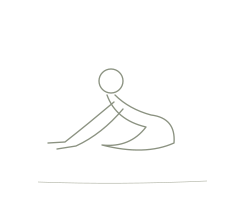
Loneliness
“Today,” the yoga teacher said, “we’re going to make room for loneliness.”
“Can we practice together?”
The teacher smiled.
“Yes.”
They settled onto their mats.
Someone shifted a little closer.
Someone thought of a person she missed.
“What if this feels hard?”
“We can pause.”
“Do I have to say anything?”
“No.”
“What if I need someone?”
“You can reach.”
The room grew quiet.
No one had to explain.
Maybe being with ourselves can include letting someone sit beside us.
Maybe we can make room for loneliness and still make room for one another.
Receiving
“Today,” the yoga teacher said, “we’re going to practice receiving.”
“What do we give?”
“Nothing.”
The students looked confused.
Someone offered help.
Someone else offered gratitude.
Another promised to return the favor.
“Notice,” the teacher said.
“What?”
“How quickly receiving becomes owing.”
The room grew quiet.
Maybe receiving is difficult because giving lets us remain in control.
To receive is to open our hands and discover that sometimes love arrives without requiring repayment.
Rest
“Today,” the yoga teacher said, “we’re going to practice rest.”
A student raised her hand.
“I’m not tired.”
“That wasn’t the question.”
Another student shifted.
“I have too much to do.”
“Notice.”
“What if I fall behind?”
“Breathe.”
So they rested.
And slowly they noticed how difficult it was to stop producing without feeling guilty.
Maybe the body was never asking permission to rest.
Maybe it was waiting for us to stop making rest something we had to earn.
Joy
“Today,” the yoga teacher said, “we’re going to practice joy.”
“That sounds easy.”
“Good. Show me.”
Someone danced.
Someone laughed.
Someone stopped herself mid-laugh.
“Notice.”
She let herself laugh again.
Someone wondered whether she deserved to feel happy with so much unfinished.
“Notice.”
Maybe joy becomes difficult when we believe it needs justification.
But perhaps joy is not a reward for having solved our lives.
Maybe sometimes joy arrives.
And the practice is simply letting it.
Play
“Today,” the yoga teacher said, “we’re going to practice being bad at something.”
“Why?”
“Because you might enjoy it.”
They tried.
They wobbled.
They fell.
They laughed.
No one improved.
Nothing was achieved.
No one measured a personal best.
And somehow,
it was wonderful.
Maybe somewhere along the way we turned everything we loved into something we needed to be good at.
Maybe play is remembering that joy existed before mastery.
DEEPENING: WHAT WE CARRY
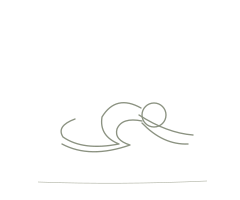
Change
“Today,” the yoga teacher said, “we’re going to practice change.”
“I liked the old pose.”
“I know.”
“Can we go back?”
“You can.”
“Will it feel the same?”
“No.”
The room became quiet.
Because sometimes returning does not return us.
We have already changed.
Maybe growth asks us to grieve versions of ourselves we once needed.
Not because they were wrong.
Because they carried us here.
Thank them.
And keep going.
Impermanence
“Today,” the yoga teacher said, “we’re going to practice impermanence.”
“What does that mean?”
“Everything changes.”
“That’s depressing.”
“Only if you believe something must last to have mattered.”
The room became quiet.
They thought about seasons.
Bodies.
Homes.
Friendships.
People they once loved.
People they still did.
“Breathe,” the teacher said.
Maybe the practice isn’t learning how to keep what we love.
Maybe the practice is learning how to love it fully while it is here.
Grief
“Today,” the yoga teacher said, “we’re going to practice grief.”
“How?”
“Make room.”
“For what?”
“For what is no longer here.”
No one spoke.
Because everyone had something.
A person.
A place.
A relationship.
A version of themselves.
“What do we do with the empty space?”
“Nothing yet.”
Maybe grief does not always need to be transformed.
Maybe some spaces deserve to remain empty for a while
because something meaningful once lived there.
Surrender
“Today,” the yoga teacher said, “we’re going to practice surrender.”
“So we give up?”
“No.”
“Then what do we do?”
“Stop forcing.”
There was a difference.
They had spent years confusing effort with devotion.
Pushing.
Fixing.
Holding tighter.
Trying harder.
“What if trying harder has always worked?”
“And what if this time it doesn’t?”
Silence.
Maybe surrender isn’t giving up on what matters.
Maybe surrender is recognizing when force has stopped being love.
Rejection
“Today,” the yoga teacher said, “we’re going to practice rejection.”
“No, thank you.”
I wanted to laugh.
Then I thought of all the times I had tried to become someone another person would choose.
On the mat, I noticed how quickly I tightened.
How wanting could become reaching.
How reaching could pull me away from myself.
I could want them to stay.
I could hurt when they didn’t.
The practice was letting their answer be their answer
without making my whole life an argument against it.
I took a breath.
There was still a place for me here.
Holding On
“Today,” the yoga teacher said, “we’re going to practice holding on.”
Everyone tightened their grip.
“Now notice why.”
Someone was afraid of losing balance.
Someone was afraid of losing control.
Someone simply did not want something to end.
“When do we let go?”
“When holding requires more of you than loving ever should.”
The room became quiet.
Maybe perseverance and attachment can look identical from the outside.
Both stay.
Both try.
Both endure.
The difference may be what happens inside us while we are holding.
COOL DOWN: RELEASING
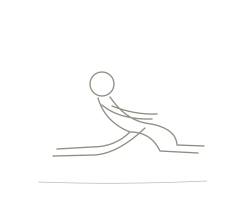
Letting Go
“Today,” the yoga teacher said, “we’re going to practice letting go.”
“Of what?”
“Something you can no longer carry.”
“What if I still love it?”
“You can.”
“What if it mattered?”
“It can.”
“What if I’m not angry?”
“You don’t have to be.”
The students had thought letting go required making something wrong.
A person.
A place.
A dream.
A former self.
But perhaps release does not require rejection.
Maybe we can put something down gently.
Thank it.
Love it.
And still leave with empty hands.
Becoming
“Today,” the yoga teacher said, “we’re going to practice becoming.”
“Becoming what?”
“I don’t know.”
“How will we know when we get there?”
“You won’t.”
The students looked disappointed.
They wanted a destination.
A finished version.
Someone they could finally become and then stop questioning.
“Breathe,” the teacher said.
So they did.
And for a moment, nobody rushed toward the person they thought they should be.
They simply inhabited the person they were.
Maybe becoming isn’t leaving ourselves behind.
Maybe becoming is remaining curious about all the selves we have not met yet.
SAVASANA: HUMAN BEING
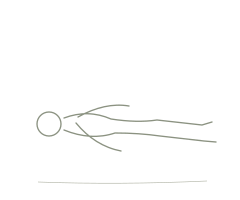
Just be.
About the Author
Dr. Nicole Parsons is an educational leader, scholar, writer, and yoga teacher specializing in neurodiversity. For more than fifteen years, she has worked with neurodivergent learners in higher education, exploring how people learn, how environments shape their experiences, and what becomes possible when their strengths are recognized.
Her work brings research into conversation with lived experience. Through teaching, leadership, storytelling, and memoir, she considers questions of identity, belonging, connection, and the many ways we become ourselves. Yoga offers another way to explore those questions through movement, breath, and attention.
An athlete who has run 20 marathons, Nicole believes there is an athletic mindset in all of us—one we cultivate through practice, perseverance, rest, and recovery.
Nicole is also a mother. She became a parent at nineteen, and her children, Brianna, Patrick, and Kate, have grown alongside her through education, change, and the work of building a life together.
Her human history includes loving a mother whose extraordinary kindness existed alongside lifelong mental health struggles, losing her brother to suicide, and learning that love and closeness can feel different to different people. Her family’s roots are on Graciosa, an island in the Azores. These experiences inform her curiosity about what we carry, what others cannot see, and how we might meet one another with greater understanding.
The Practice of Being Human brings these parts of her life together in a collection of meditative narrative poems about love, belonging, loss, and the unfinished work of being human.
Nicole lives in coastal Massachusetts, where she teaches, leads, writes, practices yoga, and continues learning how to hold the pose.